In the United States, both the Federal tax code and the tax codes of individual States specify which beverages are classified as https://fakultastarbiyah.ui-bbc.ac.id/2022/06/14/celebrities-who-died-of-overdose-2/ “ beer,” “ wine,” or “distilled spirits” and their alcohol content. According to those definitions, “ beer” includes strong beer (i.e., beer with an alcohol content greater than 3.2 percent), beer with an alcohol content of up to 3.2 percent, ale, malt liquor, and similar types of beverages. Similarly, “ wine” encompasses wine, vermouth, champagne, sparkling wine, cider, and related beverages. The broadest category is that of “distilled spirits,” which includes numerous beverages, such as gin, rum, vodka, whiskey, scotch, bourbon, and premixed cocktails. It relies on faulty comparisons between moderate drinkers and nondrinkers. In short, many moderate drinkers are healthy for reasons that have nothing to do with drinking, and many nondrinkers are less healthy for reasons that have nothing to do with alcohol abstention.
- Other data collected by traditional means immediately after study completion demonstrated that drinkers—particularly heavier drinkers—retrospectively underreported their alcohol consumption.
- Another study found that one component in red wine may protect the brain from stroke damage.
- To others, including many researchers, the term may encompass more than nondrinkers, including some people who drink a little bit.
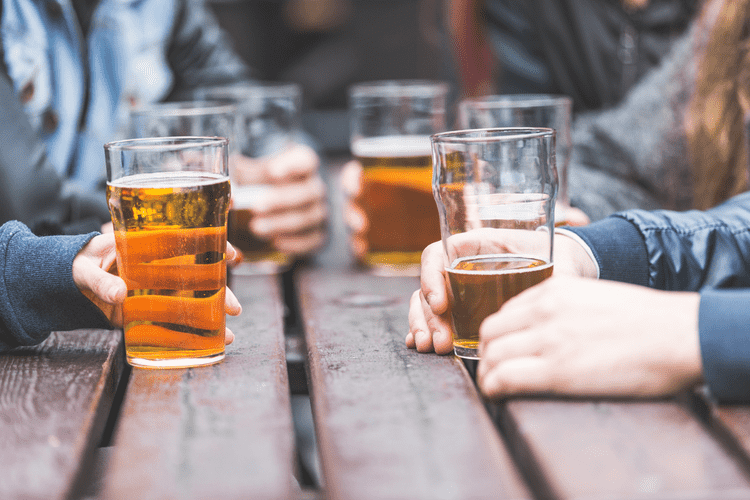
- Bottle of 5% ABV beer or a five-ounce glass of 12% ABV wine, or 1.5 ounces of 40% ABV liquor.
- Past studies may have masked the health benefits of not drinking at all.
Take Control of Your Blood Pressure: Lifestyle changes and therapies to lower your risk of the “silent killer.”

The definitions for a drink in the US are the common serving sizes for beer (12 ounces), wine (5 ounces), or distilled spirits/hard liquor (1.5 ounces). As more research confirms the negative health effects of alcohol consumption, even in moderate amounts, long-held beliefs about the purported health benefits of the occasional drink or two are shifting. Moderate drinking generally means no more than one to two drinks per day. The mechanisms by which such a drinking pattern may increase or decrease cardiovascular health are not entirely understood and are likely multi-factorial. For example, alcohol consumed in moderation may increase blood pressure but may also help prevent diabetes and lower cholesterol. Generally, the recommendation is for no more than two drinks a day for men and one drink a day for women.
Ways to stay healthy
- Additionally, some insurance plans may require prior authorization or limit the amount of treatment covered.
- Our content is medically reviewed to help ensure accuracy and reliability.
More recently, a 2020 research review highlighted the health benefits of light and moderate alcohol consumption, including reduced cardiovascular disease and type 2 diabetes. Overall, the report confirmed the link between alcohol use and seven cancers, and said risk starts to increase “with any alcohol use” and goes up from there as drinking becomes heavier. Women have a higher risk of alcohol-attributable cancers per drink, the study found. The researchers analyzed “lifetime cancer risk,” meaning the number of people out of 1,000 who would be expected to develop an alcohol-attributable cancer at any point in their life. For men, at one drink per can an alcoholic drink in moderation week, the lifetime risk was 5.6 per 1,000 people. At two drinks per week, that risk went up to 6.1 per 1,000 people (5.2 for women).
- Drinking is embedded into certain parts of American culture, particularly sports, she adds.
- Women tend to have proportionately less body water and more body fat than do men and therefore may achieve higher BALs than do men with the same body weight after drinking the same alcohol amount.
- In the United States, however, each bar, restaurant, or other establishment that serves alcoholic beverages can set its own standards, although establishments generally are consistent in the sizes of the drinks they serve.
- Humphreys noted that alcohol is, in essence, a drug, and people should take that into consideration when deciding how much to drink.
- Although no one method or assumption is inherently better or worse than another, substantial differences in their use and in the resulting findings exist.
General Health
Detoxification, commonly known as detox, refers to the physiological process of eliminating harmful substances from the body. It is the initial step in overcoming addiction and paving the way for a healthier, substance-free life. During detoxification, the body works to metabolize and eliminate the toxins accumulated from prolonged substance abuse. Heavy drinkers may experience tension in relationships, legal issues, or performance problems at work or school. The strain from alcohol abuse can lead to isolation, conflicts, and breakdowns in personal and professional life. Our content is medically reviewed to help ensure accuracy and reliability.
Carl Radke of ‘Summer House’ Recalls ‘Darkest Period of My Addiction’ in Exclusive Memoir Excerpt
Chen’s research has shown how alcohol affects people of East Asian descent who have a genetic variation, ALDH2, which interferes with their ability to metabolize acetaldehyde. These people — about 8% of the world’s population — often experience facial flushing and a rapid heartbeat after just one drink. More information about alcohol and cancer risk is available in the Surgeon General’s advisory. When it comes to alcohol, if you don’t drink, don’t start for heroin addiction health reasons.